Showing posts with label computer. Show all posts

Sunday, December 9, 2012

Find Solutions to Your Computer Problems Online


By Uchenna Rodger Ani-Okoye

When it comes to fixing an array of computer problems, it may be best for you to venture online and look for solutions, rather than the alternative. In most cases, all you'll need to do is locate a suitable website, call them up through the system and grant them remote access to your computer and you're on your way.
There are tons of different computer repair services that you can find out there, all of which have highly experienced and competent professionals on their payroll that can help you. Through the utilisation of these services you can ensure that your computer is running optimally at all times.
The quality and efficiency of the computer support that you receive depends greatly on the company you hire. In most cases, the repair process is fairly simple. All you will need to do is get in contact with a suitable support service you've found online, and they will ask you to tell them exactly what's wrong with your computer. Your issue may be due to a virus or hardware conflict.
After that's been established, they will then access your system, with your consent in order to locate and rectify the issue. In order for them to access your system, they will use the appropriate dedicated software, which will ensure they do not steal any data on your computer.
In order for these companies to offer you technical support, they use CNNA, Microsoft and Red Hat certified personnel that are especially trained for tackling the kinds of issues your likely to encounter. Another benefit of utilising their service is that, because they've studied the subject in detail, they are able to mass a much greater understanding of the kind of problems your likely to encounter.
Another thing that is good about these online based computer support services is that they are relatively cheap. The amount of money that you can expect to pay would be considered minimal, when compared to the fees charged by your standard computer repair store.
In addition, it's also possible for you to sign up with these services so that you can receive additional support over a prolonged period of time. With the online services you're given far more flexibility, as you can establish smaller contracts.
These companies usually offer a fairly substantial range of support, whether it is for the removal of computer viruses, operating system support, networking support and much more.

Wednesday, December 5, 2012

192.168.1.1 - What Is It Exactly?


By Elena Lexon


The IP address 192.168.1.1 is a private IP usually used as a default IP by major router manufacturers, like Netgear, Linksys, and some minor ones. In some rare cases, other devices besides routers can use this IP.

The IP 192.168.1.1 has more uses. It can function as:

- a private IP address
- a default IP address

A default IP is an IP which allows the user to easily access its router configuration settings. In order to do this, the user has to type 192.168.1.1 in the browser's address bar and enter the default username and password. Please note that the default IP, username and password may be different depending on the router brand and model. The good thing about this way to access the configuration settings panel is that it can't be accessed from the outside of the network.

After you gain access to your router's settings page, you will notice that there are several options in the menu on the left. Search for the Setup Wizard. It will help you configure your router to connect to the Internet and at the same time it will identify all the other computers in the network.

However, in some cases, after you type in the IP nothing will happen and the login box won't appear. There are several reasons why this can happen and some of them are:

• Wrong IP - In this case you have to check your router's default IP by either looking at the user's guide or by visiting the producer's website. There are also other ways to check your default IP, but we won't discuss them here.

• Faulty or unresponsive router - Contact your manufacturer

192.168.1.1 - Private IP Addresses

The so called "Private IP" are generally utilized in smaller networks, like the ones you have at work or at home. The use of private IPs drastically increases the security of the network, because they are not connected to the Internet directly. Since the private IP can't be accessed from the Internet nor it may go to the Internet, all the devices in the network that need internet access use NAT gateway. The NAT device has a unique IP assigned, and it can be described as the main point which enables direct Internet access.

When a certain computer in the network requests internet access, the information from that computer is sent over to the NAT device and it passes that information on to the Internet. By doing this, the network security is improved and more computers in the network can access the Internet at the same time.

Saturday, December 1, 2012

The New iPad Features

Front View of iPadiPad Retina Display

With first batches shipping out by March 16, this year, it would be prudent to order yours right now. Here is a compilation of the top 6 features on the iPad that sets it apart from its predecessors.

Before we begin, there are just a few things I'd like to mention. The new iPad does not have Siri on it. Although it does have a basic voice dictation system, users (including me; it's always tricky to type on digital keypads) will be disappointed to know that Apple has not packed in Siri into the list of features. Also, with the unveiling of the new iPad, the price for iPad 2 has been cut by $100, which makes it on sale for $399.

It is unclear as to how long the iPad 2 will stay in the market after the new iPad's shipping, but for those who love Apple and yet can't afford their high-end goods all the time, this is certainly something to smile about.

Top 6 Features on the New iPad


The Retina Display

The iPad 2 had a great display of 1,024 x 768. So what about the new iPad? Why not double the pixels! With a high-definition 2,048 x 1,536 pixels, Apple has jokingly asked users to try to distinguish the different pixels. I mean, 3.1 million pixels that give you unparalleled picture viewing capability with super smooth zoom features! This is fairly new in terms of display technology, something that you as a consumer should think over before going out and buying the new iPad.

High Powered Hardware

Most would fawn over the display and rush out to buy the new iPad already. But if you're not that convinced and are still reading, chances are you're looking for more power than glamor. The new iPad brings the dual-core 1GHz Apple A5X, with a quad-core GPU. This means the new iPad has, just like the display, twice the computing power than the iPad 2. Which also means that it's almost four times faster than a Tegra 3 processor. Unsurprisingly, they've also added more RAM to support the processor and the display. The new tally comes to a sweet 1GB of RAM, which is twice the amount put in the iPad 2. Again, there isn't anything 'new' in the new iPad, but the upgraded systems definitely boost your work output. This is also something that basic users may want to overlook. If you're not going to use the processor to the full, you may want to skip this product till Apple develops something better. If you're not a total Apple fan and think the price is too much, there are alternatives to the iPad that you can try.

4G LTE

Your choices are either AT&T or Verizon. A 4G LTE connectivity on a mobile device makes the new iPad a very powerful tool in the right hands. Ultrafast high-definition video play and data transactions are a piece of cake for the new iPad. Now what do you do if you think all this speed is too much to ask for? You share it, of course! With the Personal Hotspot feature integrated with the new iPad, you can now link up to 5 devices to your iPad, through Wi-Fi, Bluetooth or the USB. The iPad is world ready and it's fairly easy to start your own personal hotspot; just make sure it remains secure and you're good to go. This is definitely a high-tech feature that is useful to a lot of users.

Looks and Feel
The iPad maintains the same 9.5 x 7.31 inches of size, making it very comfortable for iPad 2 users to switch to the new iPad. What is different is the weight and feel. The thickness of the new iPad is 0.37 inches deep, which is 0.04 inches thicker than the iPad 2. The 4G version weighs at 1.46 lbs, but this is a minor problem (if you consider it a problem at all), considering the display and speed that you get.

Apps and Photo Tools

The new iPad again bests the iPad 2, with the 5-megapixel rear-facing iSight camera, which allows you to take 1,080 HD videos. This is a lot compared to the now laughable 720p video recording on the iPad 2. As usual, seamless programming allows you to use the Photo Tools app (available at the store for $4.99) to edit and modify the videos and pictures you take, as well as sending them over to other Apple devices, uploading on social networking sites or storing them in the iCloud. Photo Tools also let you create photo journals for you to keep track of, as you keep adding more stuff to it.

In addition, Apple has announced a new range of apps that will match the display and processing speed of the new iPad, along with upgrading the existing apps to function better on the new iPad.

Battery Life
Apple has decidedly left no stone unturned with the new iPad, offering 10 hours of battery life (9 hours for the 4G version). This is the same as the battery life for iPad 2; 10 hours for the basic iPad 2, 9 hours for iPad 3G. With all the things you can do on an iPad, a 10-hour battery life is definitely something you'd want.

The 16GB LTE model is priced at $649, with the regular Wi-Fi model for $519. Each model's price increases by about $100 and $200 for the 32GB and 64GB ones, respectively. Simplicity will dictate that the new iPad is an upgrade from the iPad 2, but it remains quite an upgrade. This means two things - one, if you're not doing anything too hardcore that you truly need the new iPad for, the iPad 2 is sufficient enough for now. It should be good enough till Apple comes out with something comparatively new to the tablet scene. The second thing is that, the reason basic users would want to buy the new iPad would be the smooth file sharing, Apple TV viewing and faster iCloud connectivity.


By Arun Prabhu

Thursday, November 29, 2012

7 Ways Smartphones Are Making an Impact in Our Daily Lives


By Alan H Hall

A few years ago, no one even knew about the term "smartphone." The scenario is totally 
opposite today, with a truckload of options in terms of smartphone devices that are available
 in the market. Almost all big mobile brands such as Apple, RIM, Sony, Nokia, HTC, LG and 
Samsung to name a few, have launched their own smartphone models, and hence, the users 
are spoilt for choice.
Such is the penetration of smartphones in our lives that we often rely on it for carrying out most of our daily activities. Let us take a look at some of the areas where smartphones help us carry out our tasks with ease.
• Finance and Business
In app stores, plenty of smartphone apps for business and finance are easily available. These apps are used to manage personal finance like keeping a track of your bills and receipts, maintaining your investment portfolio etc.
Additionally, if you are a business professional, these apps will help you catch up with the latest stock updates or help make payments/transfer money wirelessly.
• Education
Yes, smartphones have invaded classrooms as well. Nowadays, kids are more tech-savvy as compared to their parents and can handle the smartphones and the apps in them quite effortlessly. Using their devices, they can learn a lot from various education apps that are easy to use and make their lessons fun.
• Entertainment
When you are bored on a weekend and have nothing to do, you can turn to your smartphone to entertain you. Watch movies, trailers, videos or listen to songs and do much more using lots of other apps that are meant for entertainment.
• Gaming
Advanced technology has turned smartphones into gaming consoles; now you can use your smartphone devices to play a wide range of challenging games such as - arcade games, racing games, puzzle games, role-playing games etc. Also, challenge your friends and fellow gamers to beat your score. Many of the smartphones present today, have touchscreen, which gives an enhanced experience while you play the games on your device.
• Fitness
Smartphones also act as your fitness companion. This is because you can use it to monitor your calories, watch and learn new exercises, maintain a diet chart and do much more. Also, you can use your device to locate various fitness centers/gyms or health spas near in your locality.
• General Utility
With various general utility apps, smartphones let you do so much. For instance, you can enjoy shopping from the comforts of your home, use GPS navigation to get directions, learn new recipes, jot down something important or record reminders in your own voice etc.
• Social Networking
Like smartphones, Social Networking/Social Media is also an integral part of our lives; there are rarely few people left, who are not there on any of the Social media sites such as Facebook, LinkedIn, Twitter, Pinterest etc. In fact, there are smartphone apps that are entirely dedicated to these social networking sites.

Wednesday, November 28, 2012

Website Translation Service - Gateway To Global Business Market


By Shruti S Sharda

Expert Author Shruti S Sharda
While moving into any foreign territory to expand business, website translation may not be among the first few things that a business owner usually thinks about. However, in the current internationally connected marketplace, having a strong web presence is a must to prosper. For facilitating this transition, there are numerous firms providing specialized services for website translation. Translating a website is crucial, so that potential customers in different regions can comprehend your message. In other words, it can also be called as the gateway to a foreign market.
There is a much believed thought that translation is just the matter of swapping the text. However, fact of the matter is that there is so much to translation that a layman can never get it right. At times, a website has to be entirely redesigned, following the translation process. For instance, if translated into French, Mandarin or any other language, this paragraph will have a completely different length. Therefore, the layout or design of your business website would be awry, if not adjusted properly. This is exactly where professional website translators come into the picture. They not only translate your web content into multiple languages to suit the foreign audiences but also take into consideration various cultural factors.
They are adept in the art of molding content in such a way that it appeals to every foreign market that a business owner wants to target. What may make a business flourish in the US, may not be appropriate to appeal consumers in Japan. This slight difference in the way, how you give emphasis to various aspects of all your products or services, is a crucial element of effective translation. A competent translation agency understands this fact and greatly focuses on how a business is presented in new territories.
At first sight, it might seem that every website translation service provider is offering same things; however, there are certain key attributes that you must always look for. For instance, it is good to hire a translator residing in the nation where you want to expand your business. This would ensure that the content of your website is up-to-date with the grammatical trends and colloquialisms of your target market. It would also provide you with a much better idea about how to represent your company in that particular market in the best possible way. Besides, it is also wise to make sure that the website translation services that you choose have excellent typesetting capabilities. With efficient website translations, you would be able to make your business flourish in various new foreign markets. So, go ahead and make the most of these services.

Tuesday, November 27, 2012

Top 5 Secrets to Boost Your Wi-Fi Signal for Free


By Titus Bodo


Expert Author Titus Bodo
Wi-Fi is probably the biggest thing in wireless technology since the telegraph. It can power devices at a distance and even send large amounts of data in a matter of seconds. Though many prefer wired connections for their PCs and other devices, there's no arguing with the fact that with regards to convenience, Wi-Fi will always come out on top. But there are problems with Wi-Fi that many of us would like to fix but wouldn't know where to start with. In this piece, we'll try to uncover some of the ways in which you can boost your signal without any major expenditure like buying repeaters and such.
#1: Change the Channel
Not the TV, dude, your router! When you set up a router, it picks a default channel that provides connectivity to your network. Normally, the least congested channel is chosen by default, but in your case, this may not be true. But to do this you need a special tool, like the inSSIDer - it's a free tool and it gives tons of information about your network, but don't worry about all those graphs that give you an overload of data; just check the column that says 'channel' and see how many are on the same channel as you, in your area. Once you've identified the least crowded one, go to your router's interface and change it to that (you can see how to get there in the router's user manual.)
#2: Update your Firmware
Network device manufacturers periodically update the software that is used on their routers. Though business devices get automatic notifications when there's a new version available, consumer units may not have this as a standard feature. If the channel-changing doesn't work, then head to the manufacturer's website and check for updates that will make your connectivity better. Most fixes address connectivity issues so it's likely that you'll find a solution in this method. Most consumers don't even know that they need to regularly update their firmware, so be one of the first few to be in on this secret.
#3: Update your Driver Firmware
Another great method is to download and install new firmware for the wireless adapter on your PC, laptop or other device. A good thing to remember is that major connectivity issues can be addressed by fixing your router and your wireless adapter. By updating the firmware, you're riding the crest of a wave set up by the manufacturer to fix ongoing issues such as connectivity, stability, etc. Do this and you'll probably be the first of your friends to tap into this little nugget.
#4: Change the Router's Position
This is probably the least technical of all solutions, but may end up being the best. It's possible that your router is nested somewhere between the modem and the power strip behind your PC, on a table, in the corner of the room furthest away from your door! That might give you a clue as to why visitors in the living room can't get a decent signal from your router. You can buy an additional cable if what you have isn't enough to get the router into a more elevated and central position, but then it would be a 'secret... for free' anymore. However, even a minor change in position can often strengthen the signal to a surprising extent. Try it and see if that was the problem in the first place.
#5: Get DD-WRT Software
This one's a bit dicey because getting this software to optimize and enhance your router's performance may not be an easily reversible process. Besides, if your router is under warranty when you do the installation, it may get voided altogether. Though not highly recommended for those with little or no technical knowledge about how this software works and how to uninstall it, it is a tremendous way to boost the performance of your entire system. The software is open-source so it's free to use, and the site http://www.dd-wrt.com can tell you whether your router is supported.
These are all great ways to boost your Wi-Fi signal for free. With this arsenal of secret methods in your hands, odds are that you'll find at least one (maybe more) of them gives you the kind of signal boost that you're looking for. Happy surfing!

Sunday, November 25, 2012

Important Computer Files - What If You Lost All Of Them?


By Oliver J Carlin


Expert Author Oliver J Carlin
Statistics show that 42 percent of computer users lose irreplaceable files every year. Some very simple things that the average user can do to protect themselves from becoming a statistic are:
Simple, Built-in Backup Method...
In Windows 7 and Vista:
  • Go to -> Start -> Control Panel -> Backup and Restore -> Back up files -> and then follow-on on-screen prompts. It is recommended that you choose to back up to an external hard drive. If you don't have an external hard drive then use a DVD and store it in a safe place when done.
In Windows XP:
  • Go to -> Start -> All Programs -> Accessories -> System Tools -> Backup -> and then follow the on-screen prompts and same guidelines as Windows 7 and Vista.
When doing these steps there is also an option to set up a recurring schedule. This is a good option to set up to run at least weekly so that any new information will get protected as well.
If you follow these steps you have taken a big step towards protecting your priceless computer files.
--Warning-- The whole reason you are backing up your computer files is because the hard drive might crash or the operating system you are using might become corrupt. If you backup to an external hard drive you are at the same risk of that hard drive crashing as well. DVDs are the safest option because statistics show that they will last about 20 to 25 years depending on use.
Simple Hard Drive Precautions That Will Help...
One of the reasons a hard drive will fail is because of a voltage spike from your electric wall outlet. In order to help prevent this from not only frying your hard drive, but also your power supply, motherboard and other expensive computer parts, you definitely want to plug all your electronic devices into a surge protector. Surge protectors range in price from around 10 to 200 dollars. Just remember that you get what you pay for. The more expensive ones can withstand a lot larger voltage spike than the less expensive ones. But the cheapest one is still better than nothing at all.
Need Something More?
If you are looking for a more robust solution than you are most likely going to be interested in the online data backup solution. There are various competitors out there that range in different prices. I would recommend not spending more than 20 dollars a month. Be sure to read the fine print on what the company is advertising as well. They may be advertising 15 dollars a month but the fine print says that after 2 months it will go up to 30 dollars a month.

Friday, November 23, 2012

Top Things To Do With Your New Computer Before Using It


By 

Your brand new computer has a tremendous amount of potential. With all the power and responsiveness of the new models that are coming out today, you can really do a lot with it. That is if you know how to use it and get it going in the proper way.
Here are some things that you should be doing with your brand new computer before you start even using it:
1. You should reinstall the operating system of your computer if it is a ready-made device that you bought. That's because the operating system that is installed into your device is certainly filled with some bonus features that you have no use for. To get rid of those, just go ahead and reinstall the OS.
2. A computer is not really as useful as it can be today without being connected to the Internet and to a network of other devices. You next move therefore is to set up the proper network connections of your computer so you can use it to its full potential.
3. When you have properly set up the network for your computer, the next step is to install all of the apps that you would need. The apps are the things that take advantage of the computing power of your device. You should pick the devices that you can actually use.
4. Before you start using your new computer at its full capacity, you have to make sure that it is properly protected. You should get antimalware and antivirus software to ensure that your computer has a good chance of being able to withstand malicious software out there.
5. The next step for you is to restore or transfer the files that you have from your old computer. That is if you were able to back them up properly. You should restore those before you start using your new computer.
6. These days, the PC is just part of the game. In order to take full advantage of the power of information technology, you should have it synched with your mobile devices as well. That would allow you to use all of your devices to their full potential.
7. You can now start customizing your desktop so that it would reflect your personality as well as your preferences. You can change wallpaper and the screensaver for example. This also goes beyond the appearance.
8. New hard drives that are coming out have features which allows them to detect if they will be running defective in the near future. The problem is that the warning signs are not recognized by the OS. There are tools that you can use, which would allow you to see for yourself these warning signs.
9. You should have a backup plan. Keep in mind that you are dealing with a device that is bound to fail at some point and it might do it without warning. Better that you know what you have to do.
These are just some of the things that you have to do with your new computer before you go full blast with it.
Android tablets beat Apple's prices by $200 or more. Additionally, Android tablets are not limited to just one model. Because there are many models available, consumers have more choice. Get your cheap Android tablets here. Because there are many models available, consumers have more choice. The price is averagely 20-30% low compared to any iPad available today. Go to http://cheapandroidtablet.co/ today.

Wednesday, November 21, 2012

How Do You Delete a Virus?


By David C S Lee

This is a question that is asked all the time and it is a serious one because if a virus remains on your system then it has the potential to destroy your life. So here are some methods for getting rid of it:
- The most obvious way to remove a virus from your computer is to get some antivirus software. You can buy ones or you can get a free version. For it to be effective you must keep it updated so it can detect and get rid of the latest Virus. Once you install the software it will use its information bank of virus definitions to detect and remove an intruder from your system. Different products have different information banks which mean that some will remove certain viruses but not others.
- If you are the DIY kind of person then with some basic knowledge you can remove it yourself but there are risks to doing long-term damage to your system.
-You will need to check your LOCAL_HKEY_USER folder to see if any if the registry files have been infected.
-If you find of your registry files with weird names or with inflated sizes then remove them.
-You will then need to remove all the exe files that are with the virus. These can be found in the program files folder in your C: drive.
-I can't stress enough how careful you have to be when removing viruses manually and insist you purchase a program or get a professional to do it.
-Make sure you check that any virus software you buy is not a scam. There are many programs out there that pass itself off as antivirus software when what it really is a program that ushers viruses into your system and once they are in there they literally destroy your computer. They make it virtually unusable meaning you have to scrap the old device and get a new one. This also means that you lose any important files and are putting your banking details at risk.
Best thing to do is to do a search for the program and you should get a good idea of whether it is a scam or not pretty quickly.
How do you delete a virus is a question that is asked a lot and the best answer is just to do your best not to get a virus in the first place. Install antivirus programs and Check to see if the program you're using is a scam. This will give a virus little chance of getting on to your system meaning you shouldn't have to need to try and delete it.

Tuesday, November 20, 2012

Computer Viruses and Threats and Staying Clear Of Them


Computer viruses have been on the rise and they have been giving people using the internet a very hard time and especially at the present times. The biggest danger with the viruses is that they are easily transmitted across computers and this is possible through very many avenues just as the people creating them have intended. 
Their intentions are also varied chiefly stealing personal data and secondly gaining control of networks and computers and lastly another of their intentions will be the malicious damage to information and infrastructure. The viruses are able to spread extremely fast and this is perhaps the biggest danger since they will be found in email attachments, as funny images, as even audio and video files and lots of other material which can be found online and downloaded for use on a personal computer.
Every computer owner and user should be wary of being a recipient of viruses. The fear of a virus attack is always very big and this arises also from the fear of the unexpected. Not everyone will really fear the viruses and some people especially in the cyber security niche will take their time to study various different computer viruses to identify how they have been programmed and the kind of damage they have been programmed to cause and lastly how they are able to spread. 
Having known these important pieces of information, an individual will have the necessary information to keep themselves protected and maintain cyber security. The information here is about knowing about the risk and how to deal with it far from knowing the consequences which when they finally happen are devastating. A look at some of the viruses frown at present will unearth different types which are the browser-hijackers which are usually aimed at raising advertising revenue by criminals via the directing of the browser to different websites and to voluntary download.
To mention just a few types of viruses known today, we will find the boot sector viruses, the web scripting viruses, the macro viruses, the file infector viruses, the resident viruses and the polymorphic viruses. These are just but a few of the viruses and are not an exhaustive list of the viruses known to man today. Aside from the viruses which are a big security threat, there are the worms, spyware, malware, rogue security software and the Trojans. These are threats which are equally devastating just like the viruses but are not as technically similar to the viruses.
The viruses have the potential to cause irreparable damage on the computer or the network and this has to do with the kind of problems that they are capable of causing. Of utmost importance is to have basic knowledge about the security threats and to know what measures to take to always be on the safe side. It is important that an individual knows some of the symptoms of the attacks by viruses. These will help prevent further damage being realized on the computer or on a network. 
The most obvious indications of the infection by viruses include the hard drive of the computer constantly running out of space. Computer programs will usually take quite a long time to load which is not normally the case. The programs will also be exhibiting inconsistent behavior which cannot be explained. The appearance and the disappearance of files in the computer is also a classic example of viruses having infected the computer. Other symptoms will be the display of strange graphics on the computer monitor, conventional memory reducing by a big margin among other changes which cannot be explained.
The most important steps to take so that an individual is able to protect himself from the Trojans and the computer viruses especially when online, begins with caution. Beware of downloads and the exchanging of files and documents. Open attachments only in the event that the author and the origin of the files are known. It certainly helps to side step any form of trouble. Antivirus software is another way to keep your PC protected from virus attacks. 
The antivirus software should always be updated to surely prevent any attacks. The process has been simplified and this has been so through automated updates being enabled with the antivirus software available today. Configure browsers to make sure that they do not launch programs automatically like the MS Word especially with the continued risk of macro viruses. Lastly, do a back up of the system which allows that an infected file will be replaced with a non infected file.

Monday, November 19, 2012

The Importance of Firewall


Expert Author George Cherere
All over the world, millions of people now own a personal computer or interact with other internet-capable devices, especially at work. Without question, the internet provides increased functionality for the people who are involved either in communication, work tasks, the search and collection of information, online shopping/financial transactions. People are able to make sure that the quality of life they lead has more value and life is much easier. With so many advantages, the internet is, to many, a necessity. However, there are some serious negative aspects which have to be considered when using the internet. Caution is especially advised to avoid falling prey to some of the snares set about by the criminals.
There are criminals as well as hackers who are lurking out there with ill intentions, often waiting upon unsuspecting internet users to make their moves. Some measures are vital before connecting to the internet and conducting any business. 
Once you're online the risk of falling into the hands of criminals is very high. This is where security software and applications come in and their purpose is to defend an internet user from the attacks and malicious actions of criminals. One very important security application is the firewall which acts as an intermediary between the internet and the personal computer or the network.
Many people will ask how the firewall is installed and especially how to go about getting the firewall and the options available. The answer to this and a welcome relief is that almost all operating systems come with a firewall which is already built in and all that is needed to make sure that the firewall is already on. 
The most common operating systems which have the firewall are those which operate with windows and primarily prevent attacks. Some minor configurations changes can be made as to which are the programs to restrict or to allow to run on the personal computer. 
In the scenario where an individual doest know exactly what to do, then help can be solicited from the internet to find help on how to configure the settings with your firewall. This is important since nobody would want to erroneously render the firewall useless.
The firewall is a prominent security software which should be installed in every computer to make each computer secure from attacks. It will not only protect the computer but it also protects your identity when online and from hackers who intend to steal your identity and use it to perpetrate all manner of actions and transactions. When the firewall is installed, it is made such that it will protect you from the hackers and other unauthorized users from gaining access or breaking through and using your network any moment you get online. 
The firewall is usually made to work in such a manner that it is always monitoring data which is leaving and entering the network and the personal computer when connected to the internet. The mode of operation is that the data packets are scanned against the set security criteria after which the data packet is allowed for transfer if it is considered safe. 
The best kind of firewall protection is that offered by the two way firewall protection which is able to filter outbound and the inward bound traffic hence preventing threats and providing total and complete protection. With the firewall in place, then the malware, viruses, the Trojans and any other malicious scripts will not be in a position to interfere and even get hold of your network or your computer. Firewall act as an intrusion detection system able to especially guard against incoming threats.
In conclusion, the firewall is usually available in two forms which are all important in protecting computers and the network as well. The major categories of the firewall are the firewall hardware especially for networked computers and the firewall software for the personal computers. Always ensure that the personal computer has the firewall as the first line of defense.

Sunday, November 18, 2012

A Comparison of Software Engineering and Computer Science


By Nahida Parvin

Organizations of higher learning are still not in agreement of what is meant by many technical levels, such as application technological innovation and PC technological innovation. These areas, along with it, computer, and PC technological innovation technological innovation, are simply too new. 
Therefore, what one school or employer thinks as a requirement PC technological innovation may be viewed by another as application technological innovation? In the start, computer systems were hard-wired to perform a certain function. The individual did little more than impact a button. Allowing greater individual management led to the progression of coding dialects and compilers to change "normal" terminology into PC terminology. On-line began to come into its own with the progression of the laptop or PC. Simple dialects such as BASIC gave more management to the average individual. 
This laid the fundamentals for the application professional, who not only understands the program but the physical abilities of the hardware. One method of analyzing the variations between application technological innovation and PC technological innovation is to consider how most models were managed by the first PCs.
Often, changing and printing device functions such as typeface dimension, number of duplicates, or paper dimension required coming into the proper printing device sequence in DOS. The individual may enter the details in the application or in the printing device dialogue box. Some institutions require CS degrees to take Microsoft Office as their first coding course. By the same small, application technical engineers may be finished without a simple understanding of wireless technological innovation. 
Not too many years ago, PC technological innovation roles were often filled by those with other levels, such as domestic electricians. Software technical engineers were usually those with coding skills, many of whom held no degree at all but were self-taught.
Personal Computer technology is generally the research of concepts of calculations and how they apply to Personal Computer. An on-campus of on the Internet computer technology level can help you get certified for a profession in the processing or technology industry. Online applications are generally more practical than off-line applications as one can research whenever they want to. Moreover, on the Internet levels are usually less expensive than regular applications. 
This level needs four decades of research. Programs provided in this level are related to computer technology, arithmetic and technology. Before generating this level learner can opt for an affiliate level or a document in this area. After seeking their bachelors level in this area learner can go onto get an Expert of Science level in computer technology. There are some organizations which allow learners to earn this level on the Internet.
In this program learner get innovative knowledge and focus on a particular are like computer design, human-computer connections or synthetic intellect. The choice of their profession determined expertise interest.
 Students can also opt for a PhD in computer technology. Experts can be a part of public use or private companies as specifications for their services are present in both of these companies. Illustrations of profession one can engage in after seeking a level in this area include, program specialist, system professional and data source manager. Moreover, job possibilities for computer experts are expected to grow in the future due to the use of computer systems in various areas of life. Attractive incomes are provided to computer experts.

Friday, November 16, 2012

For some Mac fans


For some Mac fans reading this, their Mac is almost like their child. However, for those of us who have both children and Macs, we have to take responsibility for educating and protecting our children on the computer. This was never made clearer to me than one late night a few months back.
My daughter was upstairs on her computer and my wife and I were downstairs watching a movie. First my daughter called down asking for her mother?s birth date. Then, two minutes after getting the answer, she called down and asked for the year. I asked my daughter why she needed to know. She replied, ?just asking.? Her mother shouted the answer before I could stop her. I paused the movie and said, ?we have to go see what our girl is up to,? because I had a suspicion she was giving out my wife?s information online. We were met on the stairs by an ecstatic ten year old that told us she had just won a free pizza. All she had to do was give them all her mom?s personal information.
From this incident I knew I had been lazy with the education of my daughter. I had helped with math and history homework but had given her a computer that is always connected to the Internet without any real instruction. This was my wakeup call. She impresses me daily with her ability to use her iBook. But the same reason kids are good students of computers is the reason they can get into so much trouble on the Internet. Children are mostly trusting and fearless. They trust that aside from dropping a computer, it can be fixed and that no harm can come to them through their actions online. Most of all they do not fear making a mistake, as many adult students do.
Within Mac OS X 10.4, Apple included ?Parental Controls? that help a parent supervise their child?s computer use. The first step is to always have children use ?Non Administrator? user accounts. Whether your child has their own computer or shares yours, they need to have a separate user account. When you create a password for your user account or the ?Administrator? account on your child?s computer, be sure to select a password they can?t guess and that you will never need to tell them. Remember kids are smart and a locked door is more tempting than an open one, so don?t think they won?t try to get your password. Next, you?ll need to create your child?s account. In ?System Preferences? select ?Accounts? and click on the padlock in the lower right hand corner of the window. Enter your password and click on the ?+? button above it. Enter your kid?s name and a password. This will be the password you can tell them, so make it appropriate to what your child can remember. There is a check box towards the bottom that will ask if the user can administer the computer. Do not check that box. Now that your new user is added, you can click on ?Login Options? and check ?Enable fast user switching.? This will let your child use their account on your computer without shutting down the things you have been working on.
Creating a ?Non Administrator? user account is just the first step. You will now need to set up limitations on that account. Doing this will require a good understanding of what your children do online and what you feel they should be able to do. In the ?Accounts? section of ?System Preferences? click on the user account you made for your child. To the right there will be a tab named ?Parental Controls.? Clicking on that will bring up five items to configure. ?Mail? is the first selection. Checking the box there will filter whom your child will communicate with. You can add email addresses to the list of friends and family. This list can be constantly updated and managed by you. It will even send permission requests to your email.
Next ?Finder & System? can be managed. This is where you will make most of your decisions about what the computer is to be used for. Do you want your child to change system settings or burn CDs? Here too you can limit what programs they can use. Limiting programs is best for younger computer users, just keep in mind that as you children grow, so too will their interests and capabilities. It may be better to let kids have access to programs you might not think they would want to use than to limit their options, and if they?re not Internet based programs, there?s not much trouble they can get into.
Configuring ?iChat? is the same as with Mail but instead it is listing permitted persons chat name. This is probably more important to use than mail filtering. Predators in particular can misuse iChat, so filtering stranger?s access is recommended. If you don?t think there are predators out there, search through the news. Anyone who is inclined to be that kind of monster has found fertile ground on the Internet. They feel safer sending anonymous emails or chatting than lurking around a mall hoping to engage a child in conversation. They?re out there, and you may be the only defense standing between your child chatting with predators on- line.
To filter ?Safari,? the next section, you will need to log in under your child?s user account and add sites one by one. To add approved sites will require your Administrator password; so only use this if you want to be in complete control of where your kids go online.
The last item is ?Dictionary? and all this does is block profanity when checked. This, like filtering ?Safari,? is a tough issue for some. If you block your children?s access to certain things then you run the risk of not preparing them for when they do encounter them later on. Instead have your kids use the computer where you can see the screen, that way you can see what they are working on and can ask questions.
Apple has also been adding parental controls to other applications too. For instance, iTunes has a new preference tab to help filter iTunes Music Store content, Podcasts and explicit content. However, as new tools are added for parents it is increasingly important not to forget to teach with those tools. I might be able to filter the websites that ask for personal information but I will miss the opportunity to teach my daughter healthy skepticism on the Internet. I can block the strangers but I still need to teach that you should not chat with people you have not met in real life first. Education, not isolation, was the intention of these tools from Apple. So use 

Thursday, November 15, 2012

Your Mac and Your Kids


For some Mac fans reading this, their Mac is almost like their child. However, for those of us who have both children and Macs, we have to take responsibility for educating and protecting our children on the computer. This was never made clearer to me than one late night a few months back.
My daughter was upstairs on her computer and my wife and I were downstairs watching a movie. First my daughter called down asking for her mother?s birth date. Then, two minutes after getting the answer, she called down and asked for the year.

 I asked my daughter why she needed to know. She replied, ?just asking.? Her mother shouted the answer before I could stop her. I paused the movie and said, ?we have to go see what our girl is up to,? because I had a suspicion she was giving out my wife?s information online. We were met on the stairs by an ecstatic ten year old that told us she had just won a free pizza. All she had to do was give them all her mom?s personal information.

From this incident I knew I had been lazy with the education of my daughter. I had helped with math and history homework but had given her a computer that is always connected to the Internet without any real instruction. This was my wakeup call. She impresses me daily with her ability to use her iBook. But the same reason kids are good students of computers is the reason they can get into so much trouble on the Internet. 

Children are mostly trusting and fearless. They trust that aside from dropping a computer, it can be fixed and that no harm can come to them through their actions online. Most of all they do not fear making a mistake, as many adult students do.

Within Mac OS X 10.4, Apple included ?Parental Controls? that help a parent supervise their child?s computer use. The first step is to always have children use ?Non Administrator? user accounts. Whether your child has their own computer or shares yours, they need to have a separate user account. 
When you create a password for your user account or the ?Administrator? account on your child?s computer, be sure to select a password they can?t guess and that you will never need to tell them. Remember kids are smart and a locked door is more tempting than an open one, so don?t think they won?t try to get your password. Next, you?ll need to create your child?s account. In ?System Preferences? select ?Accounts? and click on the padlock in the lower right hand corner of the window. Enter your password and click on the ?+? button above it. Enter your kid?s name and a password. 

This will be the password you can tell them, so make it appropriate to what your child can remember. There is a check box towards the bottom that will ask if the user can administer the computer. Do not check that box. Now that your new user is added, you can click on ?Login Options? and check ?Enable fast user switching.? This will let your child use their account on your computer without shutting down the things you have been working on.

Creating a ?Non Administrator? user account is just the first step. You will now need to set up limitations on that account. Doing this will require a good understanding of what your children do online and what you feel they should be able to do. In the ?Accounts? section of ?System Preferences? click on the user account you made for your child. To the right there will be a tab named ?Parental Controls.? Clicking on that will bring up five items to configure. ?Mail? is the first selection. Checking the box there will filter whom your child will communicate with. You can add email addresses to the list of friends and family. This list can be constantly updated and managed by you. It will even send permission requests to your email.
Next ?Finder & System? can be managed. This is where you will make most of your decisions about what the computer is to be used for. Do you want your child to change system settings or burn CDs? Here too you can limit what programs they can use. Limiting programs is best for younger computer users, just keep in mind that as you children grow, so too will their interests and capabilities. It may be better to let kids have access to programs you might not think they would want to use than to limit their options, and if they?re not Internet based programs, there?s not much trouble they can get into.
Configuring ?iChat? is the same as with Mail but instead it is listing permitted persons chat name. This is probably more important to use than mail filtering. Predators in particular can misuse iChat, so filtering stranger?s access is recommended. If you don?t think there are predators out there, search through the news. Anyone who is inclined to be that kind of monster has found fertile ground on the Internet. They feel safer sending anonymous emails or chatting than lurking around a mall hoping to engage a child in conversation. They?re out there, and you may be the only defense standing between your child chatting with predators on- line.
To filter ?Safari,? the next section, you will need to log in under your child?s user account and add sites one by one. To add approved sites will require your Administrator password; so only use this if you want to be in complete control of where your kids go online.
The last item is ?Dictionary? and all this does is block profanity when checked. This, like filtering ?Safari,? is a tough issue for some. If you block your children?s access to certain things then you run the risk of not preparing them for when they do encounter them later on. Instead have your kids use the computer where you can see the screen, that way you can see what they are working on and can ask questions.
Apple has also been adding parental controls to other applications too. For instance, iTunes has a new preference tab to help filter iTunes Music Store content, Podcasts and explicit content. However, as new tools are added for parents it is increasingly important not to forget to teach with those tools. I might be able to filter the websites that ask for personal information but I will miss the opportunity to teach my daughter healthy skepticism on the Internet. I can block the strangers but I still need to teach that you should not chat with people you have not met in real life first. Education, not isolation, was the intention of these tools from Apple. So use  those tools to help your children discover and explore safely.


by Chris McMullen 

Positioning Your Body For Maximum Comfort At Your Computer


Do you remember the old saw about how computers would change our lives for the better? We?d have more time to ourselves and lead healthier, happier lives. The truth is computers do make processing information lightening fast. It?s just that today, we have so much more information to process and so many more distractions that the computer, via the Internet, has brought into our lives.
The bottom line? Today we spend more time operating a computer (for fun and for profit) than on any other single pastime save for maybe sleeping. And if you?re a heavy computer user like me, even sleep takes a back seat to computer use every now and then.
There are health hazards to continual computer use. Personally I?ve suffered from back and shoulder pain, eye strain and numbness in my fingers. I've even had to deal with stiff joints and Carpal Tunnel Syndrome. None of this was any fun.
But I did learn a few things important enough to pass along to you today. Here are some things you can do right now to reduce or eliminate stress on our body while operating your computer.
The Concept of Neutral Body Positioning
Consider a comfortable working posture with a natural alignment of all your joints from head to toe. This method of neutral positioning helps you reduce the stress and strain on your muscles, tendons, and skeletal system thus reducing the risks of developing a musculoskeletal disorder (MSD).
Some Quick Tips - Body Posture
Your hands, wrists, and forearms should all be in a row, straight, and almost parallel to the floor.
Your head and torso should be in-line with your head slightly bent forward, facing forward, and balanced.
Your shoulders should be at ease with your upper arms hanging normally at the sides of your body.
Your elbows should be close to your body and bent between 90 and 110 degrees.
Your feet should be either supported by a footrest or should be relaxing on the floor.
While leaning back or sitting in a vertical position, make sure your lower back is fully supported.
Your hips and thighs should be supported by a well-padded seat.
Your knees and hips should be at almost the same height as your feet and slightly forward.
More Tips - Your Work Environment
Readjust your chair and backrest at regular intervals.
Periodically stretch your fingers, hands, arms, and torso.
Your keyboard, monitor, and your posture should be on a straight line to avoid any positional discomforts.
Always adjust your chair so you?re looking down at the screen, never up.
Your desktop should be at a convenient height with enough space for your equipment and the day?s work.
Your chair should give good back support and allow for height adjustment.
Your keyboard and the mouse mat should have a good wrist-rest.
A document holder placed at the height of your monitor will eliminate neck strain.

Wednesday, November 14, 2012

The first computers


Now that electronics has made sufficient progress and the first computers have proven, computers will be able to appear, arose from the need to make operations more complex.


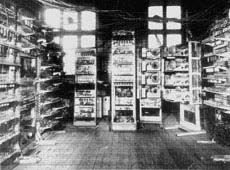
1946 : Creation of the ENIAC (Electronic Numerical Integrator and Computer) by P. Eckert and J. Mauchly . The programming of the computer is carried out in them rewiring, its content. Composed of 19,000 tubes and weighs 30 tons, occupies an area of 72 m2 and consumes 140 kilowatts. Clock: 100 kHz. Speed: about 330 multiplications per second.


December 1947 : Invention of the transistor by Shockley William Bradford , Walter H. Brattain and John Bardeen at Bell Telephone Laboratories.


January 1948 : Wallace Eckert at the IBM team and complete the SSEC (Selective Sequence Electronic Calculator). This hybrid machine is composed of multiple storage systems: eight vacuum tubes, 150 words on a memory relay and 66 loops paper tape can store a total of 20,000 words of 20 digits in BCD format. This machine could read its instructions from one of the loops of paper, even in memory, which is also a calculator program stored (even if the memory was minimal). From the point of view of IBM , so it is the first real computer.


June 1948 : NewMan , Williams and their team at the University of Manchester completing a prototype machine called the Manchester Mark I with a new type of memory consists of tubes: to store a bit of information, a cathode ray lighting a point on the tube was left switched on. To read it, it was enough to point the beam at the same place and make a voltage measurement with an electrode placed on the other side of the tube! The Mark I had a memory and 1024 bits into a single tube.
The machine was programmed (in binary form) with the stored program and the results were read on another tube in binary. It is true that the first computer.


September 1948 : The ENIAC is improved by adding a table of predefined instructions. The program entered the ENIAC could therefore use each of these instructions. We can consider that this modification transforms the ENIAC computer in, even if the program is still entered by rewiring.


May 1949 : Maurice V. Wilkes and his team at the University of Cambridge are developing the EDSAC (Electronic Delay Storage Automatic Computer) based on the design EDVAC of Von Neuman . Memory, of a size of 512 words of 17 bits, consisted of mercury delay lines. Storing the bits were converted into ultrasonic waves and transmitted to the end of a mercury reservoir. Recaptés they were at the other end and reissued. Only bits were available in electrical form.This system was slower but more reliable than static tubes.
The clock speed of the machine was 0.5 MHz and the inputs and outputs were effected by paper tape. The software supported the relocatable code at load time for each program.


August 1949 : P. Eckert and J. Mauchly , who formed their own company, develop the first computer dual-processor : the Binac for the U.S. Navy. Both processors were doing the same operations in parallel to increase the reliability of the calculations.

1949 - 1951 : First computer real time: Whirlwind created at MIT by Jay Forrester , Ken Olsen and their team. Research performance, reliability and speed of response in this computer have brought great progress. This machine was also the prototype of the computers used for computer network defense American SAGE (Semi Automated Ground Environment).


1950 : The calculator Konrad Zuse , the Z4 made ​​during the war, eventually rose to the Zurich Polytechnic and modified to perform jumps and conditional branches. When running a program, two instructions were read and preprocessed in advance. This is the first implementation of a pipeline in a computer. The machine will be used until 1955 and then transferred to France and used until 1960.

1950 : Invention of the assembler by Maurice V. Wilkes of the University of Cambridge. Before programming was done directly in binary.


January 1951 : Creation of the first Soviet computer MESM under the direction of Sergei Lebedev Alexeevich the Academy of Sciences of Ukraine.


1951 : The Compagnie des Machines Bull made ​​his first computer: Gamma 2 .

1951 : Development of the drum mass magnetic ERA in 1101 . This is the first mass memory. Capacity: 1 Mbits.


1951 : Invention of the first compiler A0 by Grace Murray Hopper to generate a binary from source code.

1951 : P. Eckert and J. Mauchly , having sold their company to Remington Rand , launch the UNIVAC I (UNIversal Automatic Computer). This is the first commercial computer history. The first was sold to the American Census Bureau for the modest sum of $ 750,000 to $ 185,000 for computer and printer fast. He was able to perform 8333 additions or 555 multiplications per second. 56 copies were sold.


1952 : The Compagnie des Machines Bull markets the Gamma 3 which won a great success: a thousand copies will be built.

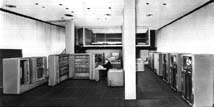
1952 : IBM produced its first computer, the IBM 701 to the American defense. 19 copies will be produced. This machine had a memory of 2048 CRT or 4096 words of 36 bits and could perform 16,000 additions or 2200 multiplications per second. The first machine will be installed at Los Alamos (see photo) for the proposed thermo-nuclear bomb U.S..


1952 IBM is contacted to start work on the production network computers SAGE whose Whirlwind was the prototype. Fifty machines, named AN/FSQ7 will be produced. Each machine contained 75,000 tubes, weighed 275 tons and consumed 750 kWh.

1952 : The first computer French, CUBA (Universal Binary Calculator Armament), was built by the company SEA .


July 1953 : IBM launches its first commercial computer in series: the IBM 650 , designed to be compatible with accounting machines mechanical punch card brand.Though slow, unreliable as it is based on the technology of vacuum tubes and expensive, a thousand copies will be produced. This will be the first computer many American universities thanks to big discounts by IBM in order to familiarize students with computers and especially the possible future customer loyalty.


1953 : Invention of the ferrite core memory in the Whirlwind which advantageously replace all unreliable systems used until now.


1955 : First computer network for commercial purposes: SABRE (Semi-Automated Business Related Environment) made ​​by IBM . It connects TTY 1200 through the United States for booking flights withAmerican Airlines .

1955 : IBM launches the IBM 704 developed by Gene Amdahl . This is the first commercial machine with a math coprocessor. Power: 5 kFLOPS (thousand floating point operations per second). It is often assumed that the machine marks the beginning of the era of supercomputers dedicated to scientific computing. It used a ferrite core memory of 32,768 words of 36 bits and was three times faster than the IBM 701 . With ferrite cores, this machine was very reliable (for the time) and fell down once a week :-) It was on this machine that will be developed language FORTRAN .

Secrets The Computer Companies Don't Want You To Know


Expert Author Marty Taylor
For less than one-hundred dollars I was able to take my piece of junk, five-year old computer and make it fast again. The good news is, it is so easy that anyone can do it.
There are four factors that greatly affect PC speed:
1. Computer processor speed (more expensive to upgrade, and not for beginners)
2. Random Access Memory (RAM; this is cheap to upgrade and installation is child's play)
3. Hard drive speed (Cheap to upgrade, very easy to install)
4. Software performance issues (Cheap and easy to fix)
Computer Processor Speed
Your processor speed is determined by your CPU. This is a tiny square chip that is directly inserted into your motherboard. If you open the side of your PC you will not see it because it will be hidden underneath a heat sink and fan.
CPUs are not the most difficult thing to replace, but you need to make sure that you buy the right one for your motherboard. Not just any CPU chip will work, it has to be supported.
If you already have the best CPU that your motherboard supports, then you need to upgrade to a new motherboard that supports higher end processors. This makes the job more complex and you are basically buying a new computer at this point.
The good news is, you can find great deals on CPU's and motherboards online and get a much better price than if you visited your local computer store.
Random Access Memory
RAM is great because it has a huge affect on overall PC performance, but is dirt cheap to buy. For applications these days I would settle for nothing less than 8 gigs of RAM, but I'm a power user. For the regular person who just wants to open documents and spreadsheets faster, 4 gigs should be enough.
Installation is super easy. Just pop off the side of your case and you will be able to see these long rectangular chips that are inserted into these plastic slots on your motherboard. Just release the clips on each side of the chip, and it will pop right out. Then you just insert the new chip into the board and you're done.
Hard drive speed
Hard drive speed greatly affects PC performance because before a file can be opened it must first be located. This is what the hard drive does. The faster it can locate a file, the faster Windows can start opening it.
Solid state hard drives are the newest thing these days, and will be further refined to run even faster. They can boot up your PC in less than 15 seconds, and don't seem to crash or freeze nearly as much as the spinning hard drives.
Hard drives are cheap to buy, and generally go around.25 cents a gigabyte these days, but it all depends on where you are located and what kind of deals you can get.
Installation is easy, just plug two cables into the back of the hard drive and you're good to go.
Software performance issues
I can't stress this one enough. It is the cause for so much frustration and it is one of the easiest to fix.
If you don't regularly maintain your computer, of course it will lose its' performance over time. This is because a computer is much like a car, and needs to be taken care of to run at maximum performance.
This means you need to run maintenance upkeep tasks such as:
-Defragmenting your hard drive
-Scanning your computer for viruses (AVG is a free anti-virus scanner)
-Cleaning your temp files, internet cache, and other junk.
-Going through your start up programs monthly, and disabling the ones you don't use.
-Scanning your computer for registry errors, and fixing them immediately.
These are just a few simple tricks that will allow you to make your PC run like the first day you bought it. You don't need to run out to the store and buy a computer every five years, simple maintenance is all that is required.